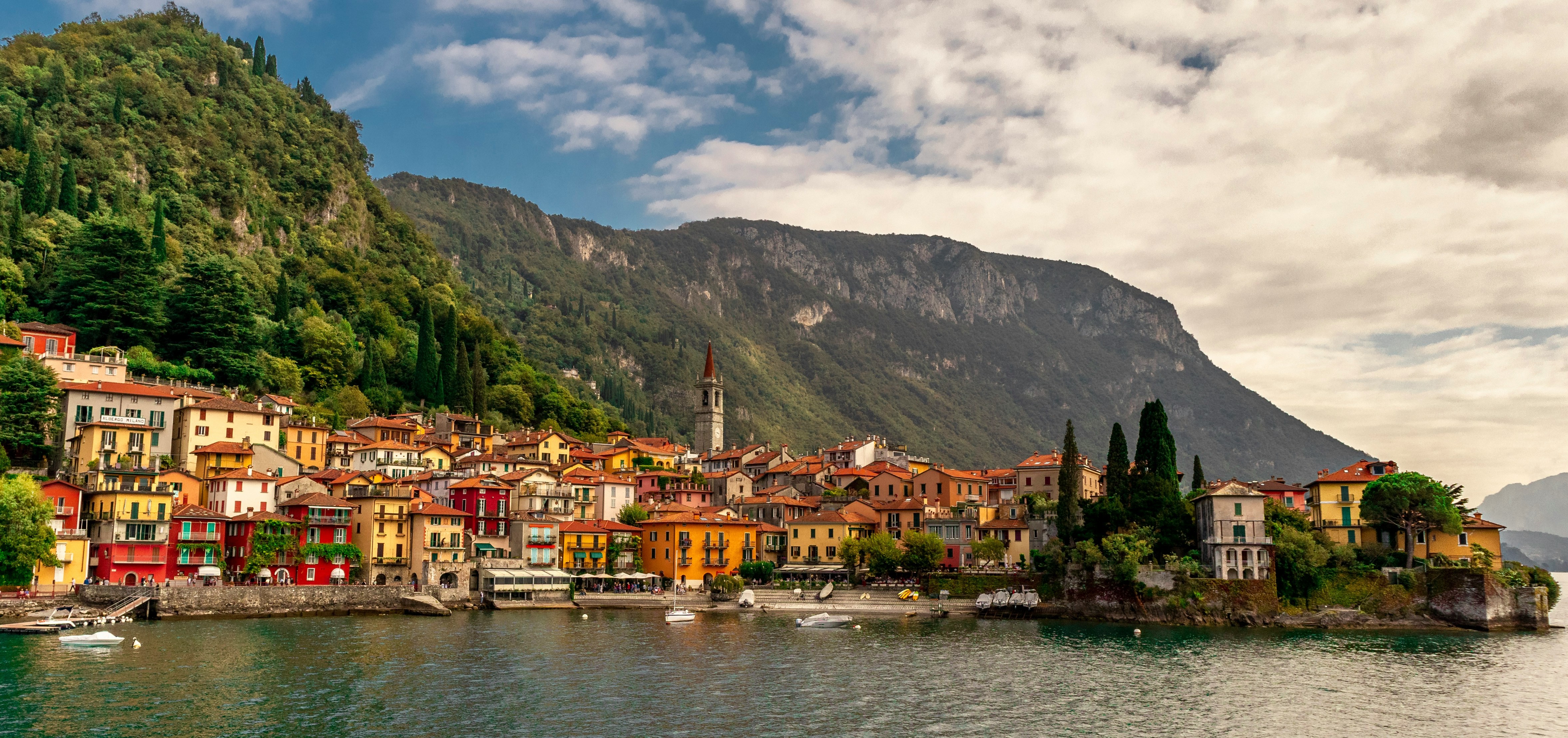
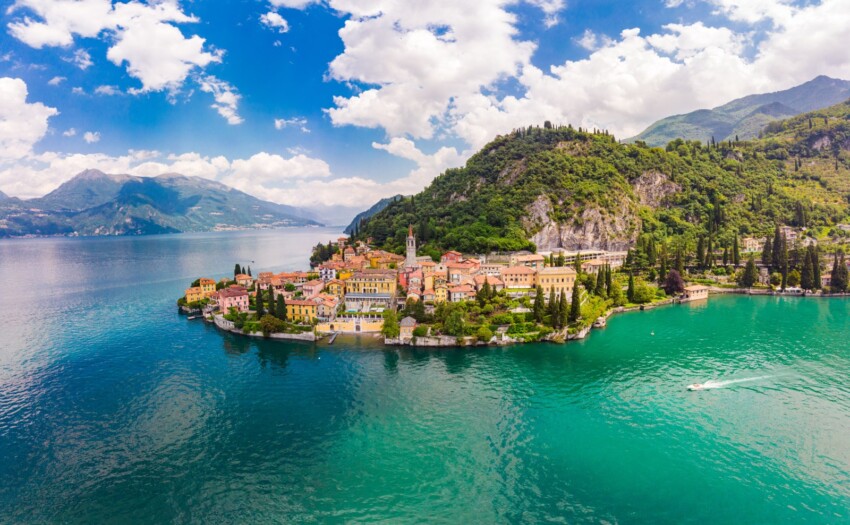
It is located right next to Villa Monastero and is a hotel, but its terraced garden is open to visitors even without an overnight stay. If you have already walked through two kilometres of botanical garden it may seem like a repeat, but it is actually a different interpretation of a lakeside garden, narrower, steeper and older.
The villa has a long and fragmented history, which is really the history of half the lake. The earliest records lead back to the Serponti, a local noble family already present in the twelfth century. It passed to Baron Isimbaldi at the end of the eighteenth century, then to the Andreossi, who were the ones who truly enriched the park in the nineteenth century, and at the beginning of the twentieth century to two English owners.
It was already operating as a hotel in the nineteenth century, to the extent that it hosted Emperor Ferdinand I of Austria and his family as they travelled down from Tyrol towards Milan along the military road opened in 1831 on the eastern shore. In 1980 came the most unusual development of all: the people of Varenna bought it through a voluntary public subscription.
Today it is owned by the Municipality and public institutions, and is operated under concession by the R Collection group, which has turned it into a hotel of around thirty rooms, some of them in the historic frescoed wing. It is also the municipal venue for civil weddings, and every year dozens of couples from around the world get married here.
The garden is part of the Grandi Giardini Italiani circuit and is laid out in staircases and terraces descending towards the water. The view suddenly opens up when you reach the lower terrace, in front of the gate opening onto the lake, and that is why this place appears in so many photographs.
Botanically, it is a strange place, and it is worth looking carefully rather than walking through it in ten minutes. Within the same handful of terraces, American agave, which flowers spontaneously here, yuccas and South American cacti coexist with camellias, Japanese maples, magnolias, cycads, windmill palms, strawberry trees, myrtle, tamarisks, pomegranates, persimmons and lemons.
It is the lake's microclimate pushed to its limits: plants that on paper should not survive an hour's train ride from Milan, even though winter at these latitudes still lasts several months. Anyone who wants to understand exactly what they are looking at can find a botanical glossary on the villa's website, with a profile for each species.
In 2026 the garden is open from April to September from 9:30 a.m. to 7:30 p.m., and in October from 10 a.m. to 5 p.m. Admission costs €13, reduced to €10 for visitors over 65, groups of at least twenty people, and Touring, FAI and ICOM members; €7 for visitors aged 15 to 25; and free for children under 14 and Varenna residents.
The combined ticket with the Villa Monastero garden costs €25, reduced to €19 and €13 for young people, and can only be purchased at the ticket office on days when the other villa is also open; it is not available online. In practical terms, the combined ticket saves one euro compared with buying the two tickets separately, so it only makes sense if you genuinely intend to visit both.
Two warnings before buying. First, the garden closes for private events, including weddings, and the exclusive-closure calendar is published on the villa's website: it is worth checking because it can be closed for two or three consecutive days even in peak season.
Second, last winter the park opened out of season for the first time, as a Christmas Garden, from Thursday to Sunday between November and Epiphany, illuminated until evening. If the initiative is repeated, that is probably when this garden is best experienced, because there is hardly anyone around.