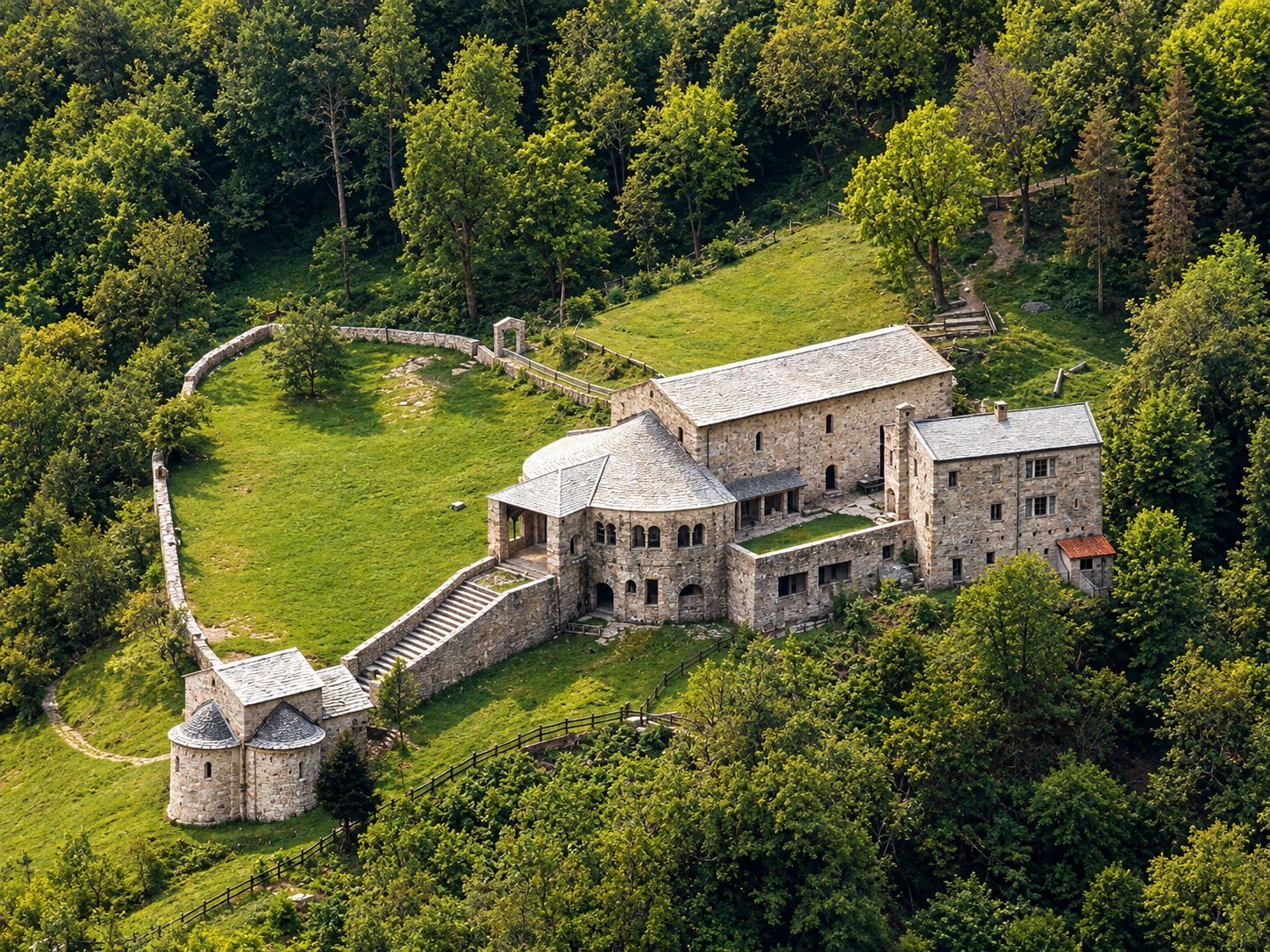
From March to October the basilica is open on Saturday and Sunday from 10:00 to 12:30 and from 14:00 to 16:00.
From November to February the Sunday opening remains, from 10:00 to 12:30 and from 14:00 to 15:00, while for Saturday you must book by the preceding Wednesday.
From Tuesday to Friday entry is by reservation only and subject to the availability of the volunteers, by calling or writing by noon of the previous day. Monday it is closed.
It also opens on 25 April, Easter Monday, 1 May, 15 August and 26 December, and remains closed on Christmas, New Year's Day, Holy Saturday, Easter and All Saints' Day.
For the weekend the guided tour can also be booked online until midnight of the previous day, choosing among the time slots with free places. Groups of more than twenty people and school groups go through the telephone or email. If the weather is bad it is best to call before setting off, because the tour may be cancelled.
The visits are free and are led by the volunteers of the Associazione Amici di San Pietro, founded in 1975 around don Vincenzo Gatti, who coordinated its restorations for fifty years.
You may leave an offering, and the proceeds go to restoration and maintenance. There are also audio guides in Italian, English, German, French and Spanish. The 10:30 mass is guaranteed only on the first Sunday of the month: for the other Sundays the association gives notice midweek on its channels.
The internal rules are few. Photography is allowed without flash and only for personal use: for photos or footage intended for a publication, or made with professional equipment, the authorisation of the parish priest of Civate is required, and drones are not allowed.
Walking poles must be left outside or put in your backpack, because inside you pass a few centimetres from frescoes and stuccoes. Dogs may stay on the meadow but do not enter the church. Camping and lighting fires on the meadow are not allowed.
Since 2016 San Pietro al Monte has been on the Italian tentative list for UNESCO World Heritage, within the serial nomination on the cultural landscape of the Benedictine settlements of medieval Italy.