The Romans arrived in 196 BC and did what the Romans knew how to do: they built a road. The Via Regina ran along the entire western shore and linked Como and Milan to the alpine passes and the lands beyond the Alps.
Menaggio stood at its most precious junction,the point where the shore road crossed the route that climbed the Val Menaggio toward Lugano,Bellinzona and the Ticino valley. Control of that passage was coveted,and for centuries many contended for it.
Whoever held Menaggio held the passage between the lake and the mountain.
So the village equipped itself with walls,a handful of towers and a castle on the rise above the harbour,whose origins date between the eighth and tenth centuries. The position was too coveted for peace to last,and the history that follows is mostly one of sieges and conquests.
It ended badly in 1523,when the troops of the Three Leagues came down from the Grisons,set the village ablaze and razed the castle to the ground: the stumps of wall still recognisable in the upper streets are what remained of it. Spanish rule arrived in 1525 and lasted,not too gently,until 1714. Under the Austrians and the reforming hand of Maria Theresa life improved,and when Italy was about to unite Menaggio was again rebellious,among the centres of the 1859 uprisings against Vienna.
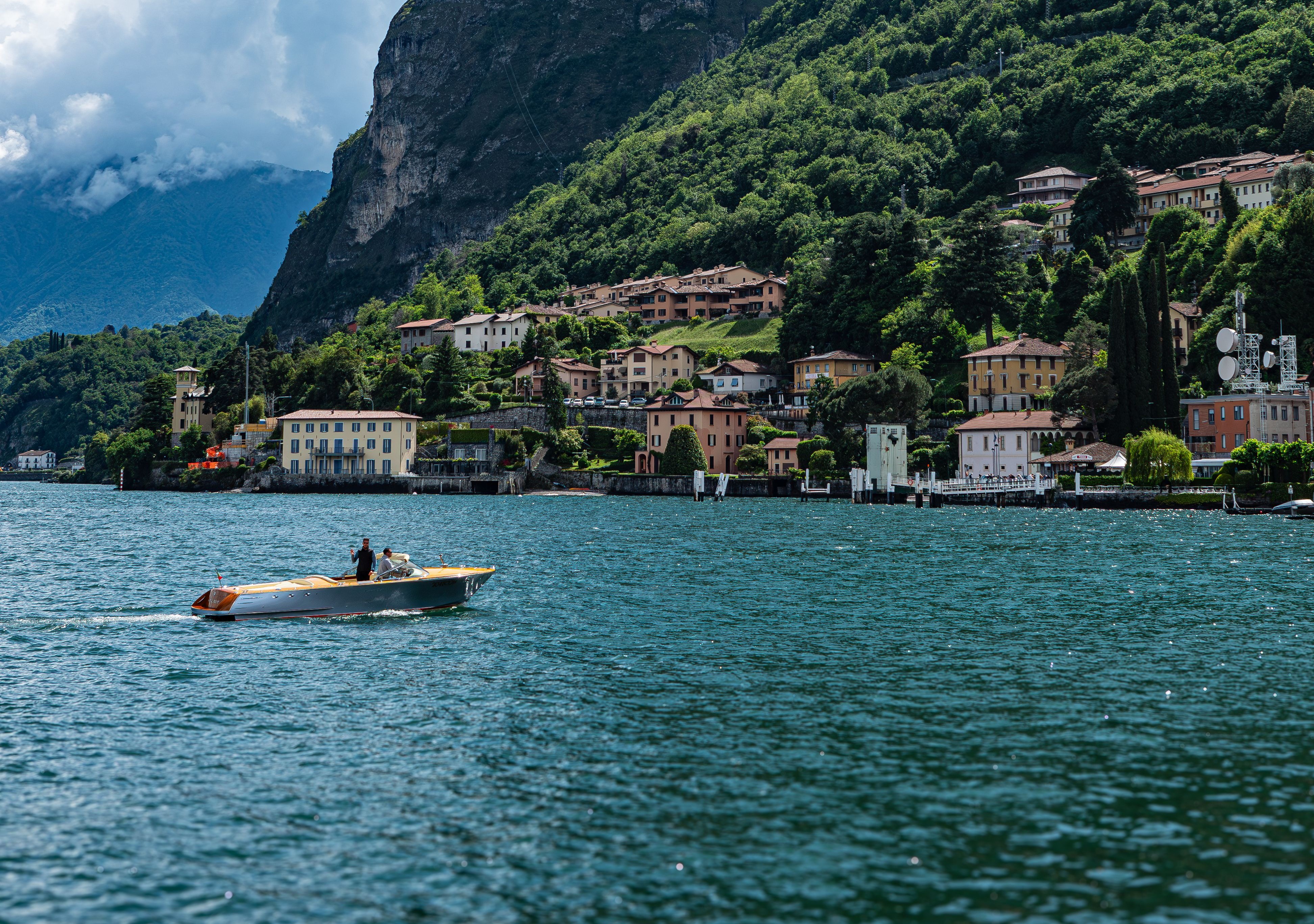
Then the travellers arrived,and everything changed a second time. Already from the early eighteenth century someone would come up here for the light and the mild air; by the nineteenth century Menaggio was a full-fledged resort town,its shore dotted with grand hotels and its hills dotted with villas.
In the 1880s a narrow-gauge railway was laid beyond the mountains as far as Porlezza,on Lake Lugano,stitching the two lakes together so naturally that a guest could have breakfast on the Lario and lunch on the Ceresio. The line remained in service until 1939.
And on a spring day in 1945 one last traveller passed through here,on the lake road heading north: Benito Mussolini,just days from the end,who stopped in Menaggio before joining the column that the partisans would halt a little further on,near Dongo. History,as always,passed through the crossroads.
Did you know? The name Menaggio almost certainly derives from a Roman,Lucio Minicio,whose gravestone is set into the façade of the church of Santa Marta. From "Minicio" to "Menaggio",over the centuries,the step was a short one.