La Greenway del Lago di Como

14 Maggio 2026

The Lake Como Greenway

author

Lorenzo Bradanini e Lorenzo Tettamanti

Tempo di lettura: 8 minuti


On the Greenway of Lake Como

The Greenway del Lago di Como is one of those routes that does not simply take you from one point to another: it changes you.

Ten kilometers that unfold like a slow story,through suspended villages,botanical gardens,villas that belong on a film set,and stretches of the ancient Via Regina.

It is an itinerary that combines the grace of the Italian landscape with the depth of history,the grandeur of nineteenth-century architecture with the simplicity of rural hamlets. A walk that seems written for those who love to travel with their eyes,their pace,and their heart.

The start of the journey and the breath of the Via Regina

The Greenway begins officially at Colonno,a village that still preserves its medieval layout of narrow alleys,houses pressed together,and covered passageways. Here the lake is close,almost domestic: you hear the sound of boats rocking,the smell of water rising from the stones,the voices of fishermen coming home at dawn.

The first section of the route follows the ancient Via Regina,a Roman road that has always connected the city of Milan to the Alps and to central Europe.

For centuries it served as a commercial,cultural,and linguistic corridor: merchants,pilgrims,armies,architects,and craftsmen all passed this way.

To walk here is to enter into a dialogue with the past. Every stone,every bend,every low wall tells a story of passage and encounter.

Colonno is also the first taste of the verticality of the Lario: houses climbing the mountainside,terraces planted with olive trees,sudden glimpses of the lake. It is a landscape that forces you to look both upward and deep,to follow the line of the mountains as they fall steeply toward the water.

Sala Comacina and Ossuccio: villages suspended between water and sky

After Colonno,the Greenway opens like a luminous parenthesis toward Sala Comacina,one of the most photogenic villages on the lake. The pastel-colored houses seem to rest on the water,as if the lake itself were holding them up.

The facades mirror themselves in the calm surface of the Lario,and every window,every balcony,every step leading down to the shore tells a story of daily life,fishing,waiting,and departure.

Opposite,almost suspended in a silence that does not belong to the modern world,Isola Comacina appears. It is a strip of land that seems to float between past and present,a place where history is not a memory but a presence.

The medieval ruins emerge among centuries-old olive trees,Romanesque churches hide between the branches,and the vegetation,surprisingly Mediterranean,smells of Liguria more than of Lombardy.

The island has a particular,almost magnetic pull: anyone watching it from the shore immediately senses that time moves differently here,more slowly,more deeply.

Continuing on,the Greenway climbs gently toward Ossuccio,following a path that threads between olive trees,dry-stone walls,and small kitchen gardens looking down on the lake from above.

It is a stretch where the landscape becomes more intimate,more gathered,as if preparing the walker for something special. And indeed,above the village,the Sacro Monte della Beata Vergine del Soccorso appears: a devotional complex that seems suspended between sky and water.

The path leading up to the sanctuary is marked by Baroque chapels,each dedicated to an episode in the life of Mary. To walk here is to enter a different rhythm: the silence grows denser,almost physical; the lake,seen from above,looks like a motionless sea; the mountains,suddenly close,form a natural embrace that amplifies every sensation.

This is one of the most contemplative points on the entire Greenway,not because of any religiosity as such,but because of the atmosphere: a perfect balance of nature,architecture,and light. Here the walk is not only movement but listening. And what you hear is not a precise sound,but a presence: that of the lake,of history,of time that flows and at the same time stands still.

Lenno and Tremezzo: where the lake becomes softness,elegance,and wonder

After Ossuccio,the Greenway slides toward Lenno,and the landscape shifts in tone,as if the lake had decided to show its gentler side.

The Gulf of Venus appears suddenly,a soft and luminous bay where the water seems to breathe more slowly,almost inviting the walker to stop,sit on a low wall,and let the stillness pass through them.

This is a stretch where the Lario turns kind and welcoming,almost Mediterranean. A little further on,around a bend in the path and among the scent of olive trees,Villa del Balbianello comes into view — a sight that looks as if it stepped out of a film,and not by coincidence it has: its elegant loggias,sculpted gardens,and dramatic position commanding the lake have made it the setting for international shoots and photographic assignments.

Balbianello is not simply a villa: it is a statement about Italian beauty,a perfect balance of architecture,nature,and light. Back on the lakeside path at Lenno,the walk becomes intimate and romantic: well-tended gardens,small boat sheds,wooden jetties stretching out over the water,views that shift with every step like frames from an art-house film.

This is one of the most contemplative stretches of the Greenway,well suited to a rest,a coffee,a moment of quiet.

The Lario opens up,between authenticity and a final moment of wonder

After the softness of Lenno,the Greenway enters Mezzegra,and the landscape changes pace. Here the lake feels more intimate,more domestic,almost secret.

Ancient courtyards open like small outdoor rooms,kitchen gardens facing the water tell of a daily life made of simple gestures,pergolas filter the afternoon light,and cultivated terraces draw patient lines across the mountain slopes.

This is a stretch that smells of authenticity: stone houses that hold against time,porticoes that give shelter from the sun,small public wash-houses where stories,voices,and communities once crossed. At Mezzegra the Lario shows its most honest face,the one it does not offer to travelers in a hurry.

Then,almost without noticing,the path moves quickly toward Tremezzo,and the landscape turns theatrical again. The Liberty-style facades,the palm trees,and the exotic plantings speak of the era when Lake Como was the buen retiro of the European high aristocracy,a place of refined and cosmopolitan villeggiatura.

At the center of this scene stands Villa Carlotta,with its botanical park of 70,000 square meters: in spring an explosion of camellias,azaleas,rhododendrons,and magnolias,while inside the works of Canova,Hayez,and Thorvaldsen weave art and landscape into a perfect dialogue.

The lakeside promenade at Tremezzo is a natural catwalk: Italian-style gardens,stairways leading down to the water,panoramic terraces ideal for watching the sunset,palm trees and exotic plants lending an almost tropical touch.

This is the part of the Greenway that most looks as if it came from the pages of a travel magazine: elegant,luminous,irresistibly photogenic.

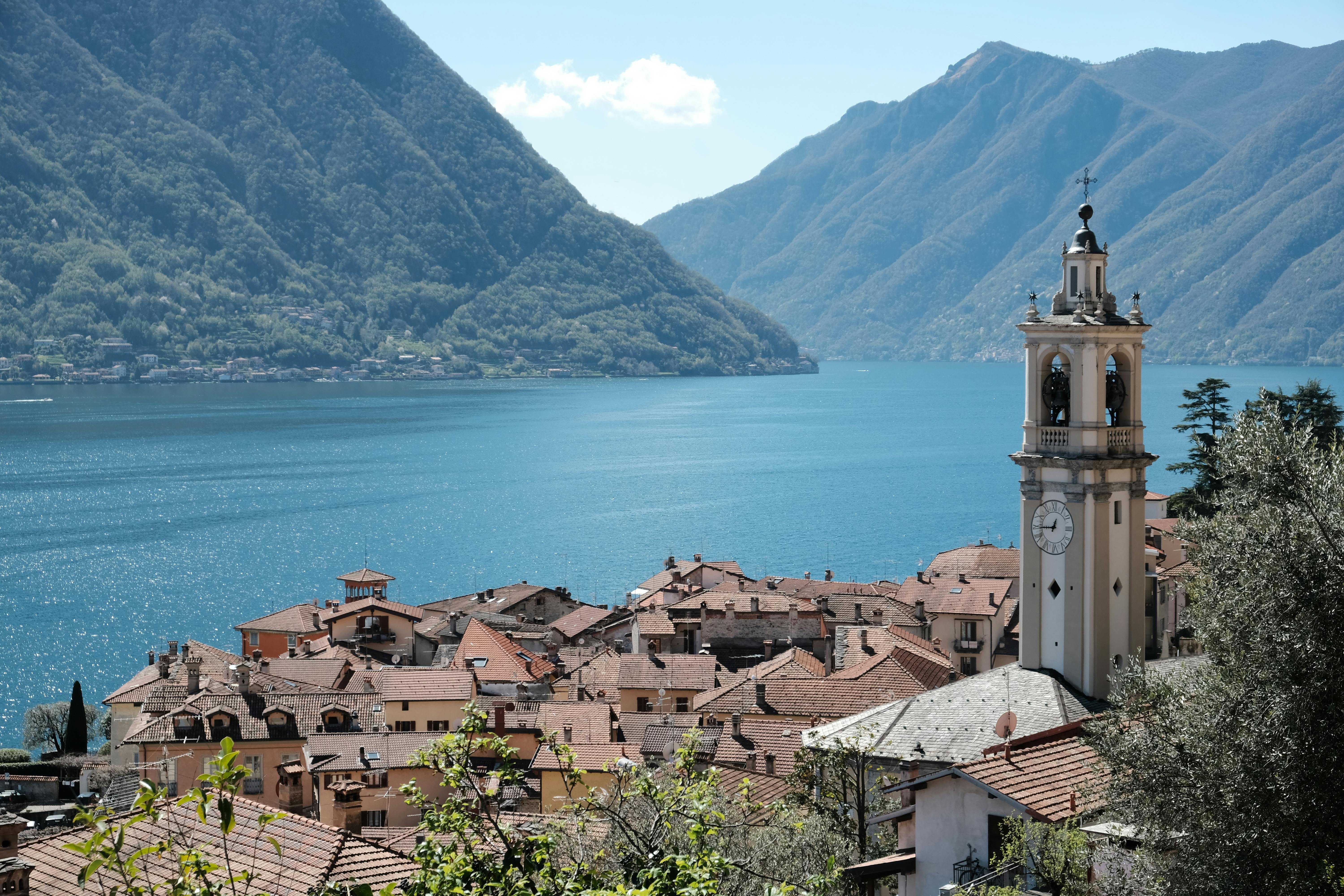
Past Tremezzo,the path begins to climb gently inland,and the final stretch becomes a visual crescendo. Between olive trees and dry-stone walls,the lake appears at intervals like a blade of light,the mountains drop steeply to the water,and bell towers rise as points of reference in a mosaic of green and blue.

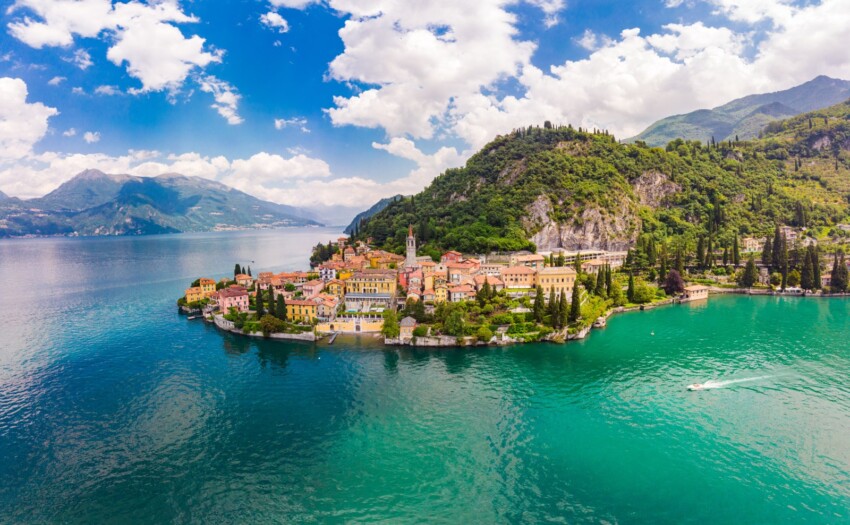
The arrival at Griante is an opening,a wide breath: from here the center of the lake shows itself in full,with Bellagio at its heart like a jewel,the Lario splitting into two perfect arms,and the peaks framing the water like stage wings.

This is one of the most intense and memorable viewpoints on Lake Como,a place that condenses into a single glance the essence of the Greenway: verticality,light,and harmony.
The step that stays with you

At the end of the Greenway,when the path widens and the lake reveals itself again without any veil,what remains is not only the landscape: something subtler stays,more intimate,almost imperceptible.

What lingers is a feeling that resists easy definition,like an echo that goes on vibrating after the walk is over. It is the awareness of having moved through a place that does not simply ask to be looked at,but that lets itself be heard,breathed,inhabited.

A place that lives in details — a worn stone,an olive tree bent by the wind,a sudden reflection on the water — and in those very details reveals its character.

The lake,which along the way played at hiding between houses,walls,and curves,here shows itself whole,like a curtain rising slowly on a final scene. The light lies across the water like a hand resting gently,the mountains fall steeply to the shore,and the breeze carries a faint smell of wet wood and Mediterranean scrub.

Everything seems to say that the journey does not truly end: that what you have seen is not only a landscape,but a way of looking at the world that will stay with you.

The Greenway,with its ten kilometers of history,silence,and wonder,remains as an invitation to return. To walk the same path again in a different season,in a different light,at a different moment in life. To see how the lake changes,how your gaze changes,how you let yourself be surprised.

Because Lake Como is not a place you visit: it is a place you inhabit,slowly,one step at a time,letting it set the pace. And when you leave,a part of you stays there,suspended between water and sky,waiting for the next return.