La vera anima del Lago di Como

12 Maggio 2026

The true spirit of Lake Como

author

Lorenzo Bradanini e Lorenzo Tettamanti

Tempo di lettura: 12 minuti


A territory,not a postcard

At seven in the morning on a late June day,the ferry leaving Como toward Cernobbio glides across a surface that,for a moment,doesn't quite belong to the water.

The lake is still,dense,almost glossy like polished metal. The bow barely grazes it,opening a thin,fragile wake that hangs suspended like a temporary mark before the surface closes slowly,erasing every trace of passage.

The villas along the shore look as if they're still asleep. Shutters down,gardens silent and motionless. Even the sound of the engine seems distant,filtered by the mountains that still hold,on their eastern faces,the last faint light of night.

At that hour the lake feels suspended outside of tourism and even outside of time. The tables are still empty. The docks almost deserted. Only a few solitary figures cross the quays: someone opening a bar,someone adjusting ropes and fenders,someone staring at the water as if trying to read it before the day begins.

The air still carries an alpine freshness that will vanish completely by midday. It is one of Lake Como's most striking contrasts: its capacity to oscillate continuously between a Mediterranean world and a mountain landscape,between international elegance and an intensely concrete local life.

In this suspended interval,Lake Como seems to belong only to itself.

Then,slowly,everything shifts.

Within two hours the scene reassembles into a completely different order. Ferries multiply,cross paths,and brush past one another in a continuous,silent choreography. Private taxi boats,groups gathering on the docks,photographers waiting,black cars arriving without a sound,different languages layering over one another in the already warmer morning air.

The lake comes alive.

Three shores,one lake

For years,Lake Como has become something that exceeds the simple category of tourism.

It is a global cultural device.

Cinema,fashion,architecture,design,the wedding industry,international hospitality,editorial photography: everything converges here. It is not just a matter of physical presence,but of a continuous flow of representation. The lake functions as an active backdrop,almost a shared visual language,one that is continuously rewritten and reused.

In few other European places has a landscape been transformed into a contemporary aesthetic code with the same intensity. It is not simply "beautiful": it is recognizable,replicable,exportable. A visual grammar built from soft light,reflective surfaces,historic architecture,and choreographed slowness.

In recent years,the territory between Como and Lecco has consistently surpassed four million tourist presences annually. But the figure alone says little,because the real phenomenon is not quantitative.

It is symbolic.

Lake Como grows not only as a destination,but as a collective mental image. It has become a synthesis of the international idea of "desirable Italy": ordered,luminous,aristocratic without being distant,natural yet constructed with cultural precision.

This construction has layered over time through several channels: international cinema,fashion,editorial photography,and also the global wedding economy,which has found here one of its most coherent settings. Historic villa,garden,lake,mountain: a narrative sequence already assembled and waiting.

The result is a stable,almost codified aesthetic: wooden motorboats with lacquered hulls crossing calm surfaces,neoclassical villas suspended between water and vegetation,ancient stone holding the light,historic gardens that seem designed to be framed,aperitivos that unfold like small theatrical scenes.

And yet,looked at closely,something different emerges.

Because the real lake never quite coincides with its representation. It continually resists its own image,exceeds it,contradicts it at the margins: in the dead hours,in the unphotographed places,in the moments when the tourist flow stops and the daily structure of the territory resurfaces.

It is in this distance between image and reality that Lake Como continues to produce meaning.

The geography of the Lario

Many European lakes develop horizontally: they have wide openings,broad shores,landscapes that stretch out without haste,almost seeking a visual continuity with the horizon.

Lake Como has none of that.

Here the geometry of the landscape does not open: it narrows,layers,and rises.

The form is not one of extension,but of vertical compression. Everything climbs steeply or plunges downward,as if the geography had chosen gravity as its only possible grammar.

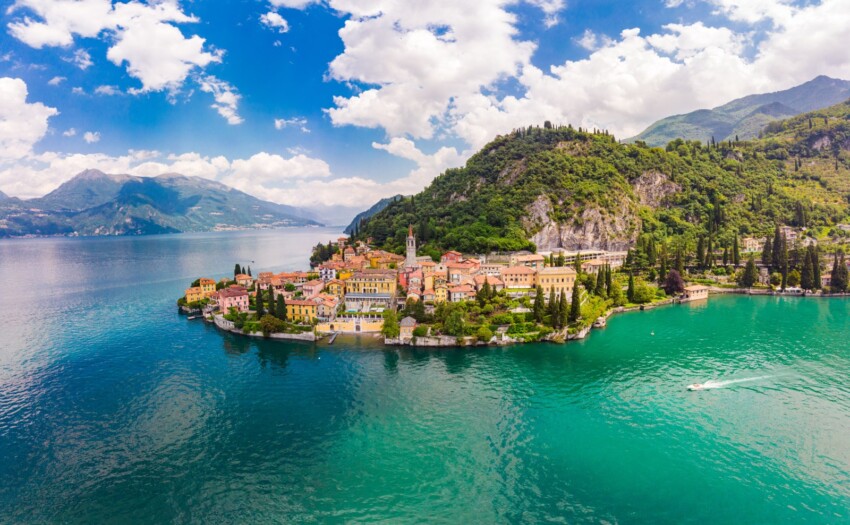
The lake basin,of glacial origin,is carved deep between the Prealps and the Alps. This origin explains its structure: steep walls descending directly into the water,with very few zones of gentle transition between flatland and lake.

Villages press together between the waterline and the rock faces that tower above them. They do not rest against the landscape: they are contained by it.

Roads bend in tight curves,adapted to landforms that predate modern mobility; stone walls support agricultural terraces built over centuries to make otherwise unusable slopes cultivable; stairways connect different levels of the same villages,a vertical grammar that replaces the horizontal logic of the road.

In this configuration,even the simplest movement changes in nature. To move is not merely to cross a space,but to interpret it.

Every change in elevation is a threshold: climbing means changing perspective,but also the density of the landscape. The light changes. The temperature changes. The quality of the air changes,along with the way sound bounces between water and rock. Space is not continuous: it is segmented into perceptual levels.

It is this verticality,physical before it is symbolic,that generates the most characteristic sensation of the lake: a beauty never fully at rest,always crossed by a silent tension between water and rock,between openness and compression,between surface and depth.

Even in the most elegant places there is always an underlying geographical tension. Behind the ordered façades of the historic villas and gardens,steep woods begin immediately,lateral valleys carved by torrents,secondary gullies and gorges climbing back toward the mountains.

These are not spectacular canyons,but a dense network of natural incisions that makes the territory continuously broken and layered.

The slopes,especially above a certain altitude,take on a more essential form in winter: the vegetation thins,the surfaces darken,and rock reemerges as the dominant structure. The landscape sheds its ornamental qualities and shows itself once more as a primary physical system,governed by gravity,water,and time.

And yet,in precisely this structural hardness,the landscape also finds its own particular form of balance: a constant coexistence of severity and delicacy,of verticality and reflection,of geological stability and perceptual instability.

The place,what the Romans called locus — not mere space but situated identity — is not decorative here.

It is instead a structural system: it determines how one lives,how one moves,and even how one imagines space itself. In other words,it is not man who observes the landscape,but the way the landscape organizes human experience that is truly central.

The villas are not the lake

Within this theater full of tensions,almost rigid in its physical structure yet unstable in its perception,the vertical dimension of the landscape translates directly into the cultural and social form of the territory as well.

The same configuration that forces the territory to develop in height and depth,rather than in breadth,generates a less visible but fundamental consequence: the constant separation between what the lake shows and what the lake is.

This is not a simple aesthetic distinction,but a genuine functional stratification of space.

The most widely circulated images of Lake Como almost always revolve around the historic villas: gates opening onto the water,geometric gardens,wisteria,suspended pools,terraces looking out toward the center of the lake.

These are real images. But they are also inevitably partial.

Because the lake does not coincide with its visual aristocracy.

Many of the now-iconic villas,among them historic residences along both the western and eastern shores of the Como branch,are the result of an architectural stratification that began between the Renaissance and the eighteenth century,then consolidated in the nineteenth century with the arrival of European aristocracy and the Lombard industrial bourgeoisie.

This process transformed specific stretches of the coastline into a highly refined landscape,where architecture enters into dialogue with the reflection of the water and the natural scenography of the basin.

However,this "designed" portion of the lake represents only one layer of the system,not the system as a whole.

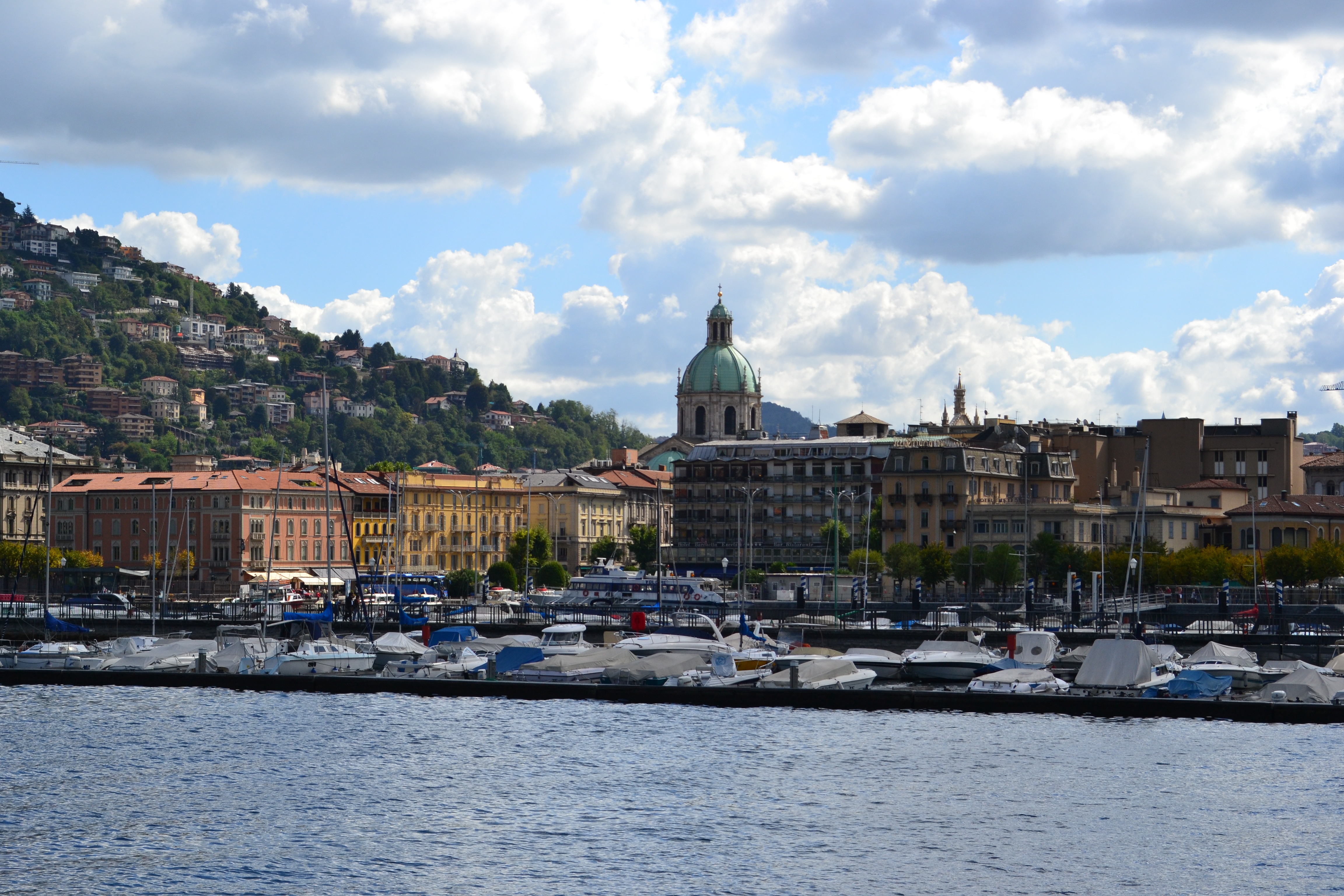
There is another Lake Como,structurally more extensive and less visible in international narratives: the one of small docks worn down by moisture,bars that open at dawn for local workers,public ferries that function as a genuine infrastructure of daily mobility — an integral part of the regional transport network.

The Lario is also the direct expression of the workshops that have remained almost unchanged for decades,of the boatyards and garages hidden behind apparently anonymous urban fronts.

Sometimes you only need to walk a few hundred meters from the main promenades — often defined over the centuries between nineteenth-century urban development and subsequent tourist reconversions — to enter a completely different dimension of the same space.

A narrow alley.

A vegetable garden suspended above the water,carved from terraces built and maintained over generations.

A stone stairway climbing toward a chapel or a hamlet invisible from the main lakeside.

A stone house with windows open in every season,not as an aesthetic gesture but as a real adaptation to a precise microclimate,where water,mountain,and wind define daily life.

This coexistence of representation and real infrastructure is one of the least told aspects of Lake Como: the same geography contains simultaneously a landscape of "image" and a landscape of "function" — inhabited,practiced,continuous.

And it is precisely in the tension between these two levels that the vertical structure of the lake,physical and cultural alike,finds its most complete form.

The invisible rhythm of the water

Those who visit the lake for a few days observe mainly its surface: the reflection,the light,the scenic composition.

Those who live here learn instead to read subtler,almost systemic variations.

The morning light on the western shore is not merely aesthetic: it is linked to the orientation of the basin and the morphology of the mountains,which advance or delay solar exposure.

The wind that picks up in the early afternoon is not random: the lake is influenced by local thermal ventilation patterns,such as the Breva and the Tivano,which arise from temperature differences between the Alps and the Po Valley.

Humidity shifts abruptly between one branch and another because the lake's Y-shaped morphology creates distinct microclimates across the Como branch,the Lecco branch,and the basin toward Colico. This produces real perceptual differences: light,vegetation,and even sound change noticeably within just a few kilometers.

Even the traffic on the water follows an almost infrastructural logic.

Early morning belongs to workers,public ferries,deliveries,and connections between opposite shores. It is a network of essential mobility that precedes tourism. By midday the surface takes on a second layer: excursions,taxi boats,photography,brief visits.

In the evening the lake slows,but it never returns to complete stillness: it remains crossed by residual movements,arrivals,local comings and goings.

Like many water geographies — deep glacial lakes and carved basins — Lake Como produces a temporality of its own.

It does not impose speed. It absorbs it and redistributes it.

The towns that resist spectacularization

Places like Bellagio,Varenna,and Menaggio are now a consolidated part of the global imaginary of Lake Como. Their centrality is real: they serve as tourist,infrastructural,and symbolic nodes of the lake system.

But the more interesting structure of the territory often surfaces elsewhere: in the less photographed towns,in the hamlets suspended above the coastline,in the villages connected by ancient mule tracks and historic paths.

Here tourism exists,but it has not completely replaced the primary function of the place.

People continue to experience the lake as a daily infrastructure before they experience it as an aesthetic spectacle. The public ferries are not panoramic experiences,but essential means of connection between shores separated by a complex geography.

The mountains are not a backdrop: they are material conditions that determine climate,accessibility,economy,and even social life.

This dual nature — global landscape and local system — is what makes Lake Como structurally unique.

On one side,one of the most desired,photographed,and represented places in Europe,now stabilized as an international cultural icon.

On the other,a geography that remains fully functional,inhabited,and infrastructural,continuing to operate according to everyday logics independent of the image the world projects onto it.

It is precisely in this tension between image and function,between surface and structure,between desire and the real use of the territory,that Lake Como finds its deepest form: not as a landscape to be observed,but as a living system that resists its own transformation into pure representation.