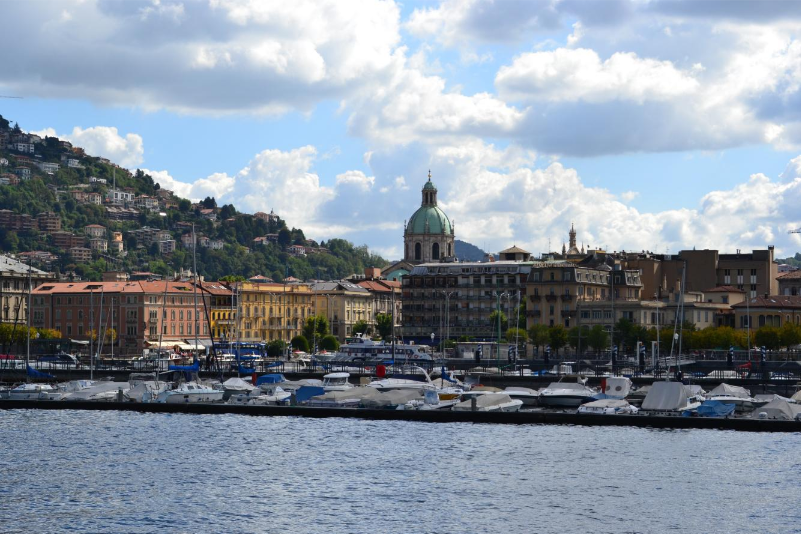
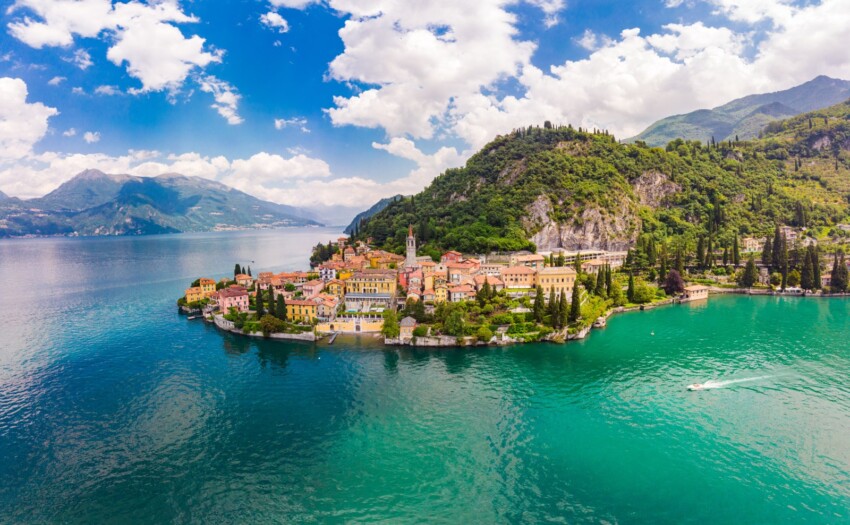
For seventeen years its lakefront was a construction site
The scene repeats every summer morning. The train from Milan arrives at Como San Giovanni,people get off with their suitcases,head down via Gallio toward the lake,buy a Navigazione ferry ticket,and by half past ten they're already on a boat headed to Bellagio. Total time spent in Como: forty minutes,thirty of which spent walking downhill.
It isn't the tourists' fault. For nearly twenty years the city did everything,without meaning to,to make itself inhospitable. The stretch of Como that everyone passes through,the shore between piazza Cavour and the Tempio Voltiano,was an open construction site from January 8,2008 until spring 2025. Anyone who visited Lake Como during that period,and there were millions of them,only ever knew a Como behind barriers. They learned it was a place to pass through,wrote about it on blogs,told their friends,and that impression stuck around even now that the reason for it is gone.
This guide starts there. Not from what's beautiful in Como,but from what's in Como that no one looks at because for seventeen years they couldn't.
In brief
- The floodgate construction project on the lakefront,begun in January 2008 and finished in spring 2025,shaped an entire generation of visitors' perception of the city.
- The three places worth the trip on their own are the Duomo,the Basilica di Sant'Abbondio outside the walls,and the former Casa del Fascio by Giuseppe Terragni,one of the recognized masterpieces of modern European architecture.
- Unlike the lake's smaller towns,Como works year-round: it's a real city,with museums open in winter and trains every half hour from Milan.
- On August 31,the feast day of the patron saint Sant'Abbondio,the civic museums offer free admission.